
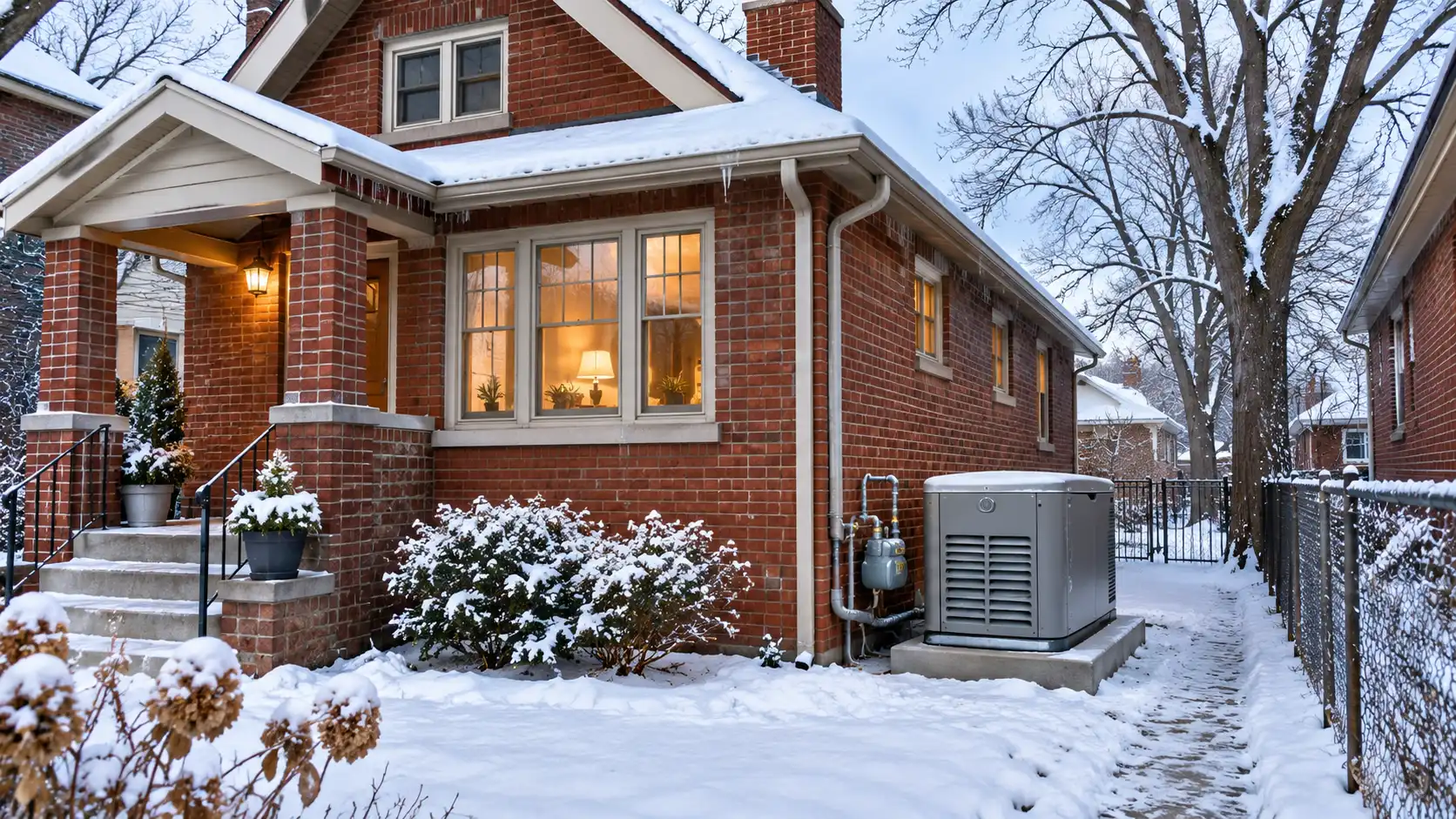
Detroit winters, aging housing stock, and narrow side yards make standby power planning different here than in many other cities. Ice can drop limbs across lines, basement sump pumps work hard during thaws, and a gas furnace’s blower is useless without electricity. A whole-home generator can keep heat, lights, and refrigeration steady. Still, success hinges on matching the equipment to real loads, fuel capacity, electrical service, and a legal place to set the unit. This article offers a practical, constraint-driven way to decide what you want to run, which fuel arrangement makes sense, how to connect through the right transfer switch, and where to site the generator so it starts reliably in the cold and meets code on a tight lot.
- Identify Critical Loads and Starting Surges First
Before thinking about kilowatts, list circuits that truly matter during an outage in January. In most Detroit homes, this includes the furnace blower and controls, a sump pump, a refrigerator, kitchen outlets for a microwave or coffee maker, lighting for key rooms, Wi-Fi and phone charging, and perhaps a garage door opener. Each motorized load has a starting surge higher than its running draw. A 1/2 horsepower sump pump and a fridge compressor can start at the same time, and the blower motor may kick up to high speed. Locked rotor amps on motors are a common reason a generator that looks big enough on paper stumbles when those devices start together. Add 240-volt loads carefully: electric ovens, clothes dryers, well pumps, and central air require more capacity and may require a larger generator or load management.
Two realistic examples help ground this step. A brick bungalow with gas heat, a gas water heater, and 100-amp service might cover heat, refrigeration, the sump pump, lighting, and small appliances with a midrange air-cooled unit, plus load shedding for a future central air condenser. By contrast, a 2,500-square-foot home with 200-amp service, central air, an electric oven, and an EV charger may need either a larger air-cooled generator paired with aggressive load management or a liquid-cooled model if the homeowner insists on running multiple 240-volt appliances simultaneously. For Detroit-specific next steps and what local homeowners consider when planning, click for a generator in Detroit | Destination.
- Natural Gas vs. Propane in Metro Detroit: Capacity and Access
Fuel availability is a defining Detroit constraint. Natural gas is common and convenient, but the generator’s fuel demand must match the gas meter and piping. A standby unit at full load can require a steady flow and pressure measured in inches of water column. If the existing meter and regulator are undersized, the generator may starve during cold starts or when other gas appliances run, causing nuisance shutdowns. Verifying meter capacity with the utility, confirming line size to the pad, and planning a dedicated regulator and sediment trap are practical steps that prevent headaches. The relationship is simple but critical: fuel supply limits real output, regardless of the nameplate kilowatts.
Propane provides independence from utility interruptions, which is useful in areas where gas upgrades are difficult. The trade-off is storage and refill logistics. A buried tank needs space and setbacks; an above-ground tank must meet clearance rules and can complicate tight urban lots. Propane’s energy content varies with temperature, so cold snaps can reduce vaporization if the tank is small. For homeowners with very tight side yards and robust natural gas service, gas is usually the easier fit. For those farther from pipelines or planning for rare but extended outages, a properly sized propane tank with a two-stage regulator can work, provided clearances and deliveries are feasible.
- Match the Transfer Switch to Your Service and Use Load Management
The automatic transfer switch, or ATS, is the gatekeeper between utility power and the generator. In many Detroit homes, the main panel is 100 or 200 amps; the ATS must be rated accordingly and, in most cases, should be service-entrance rated with an integrated disconnect. Installing an undersized ATS on a 200-amp service is a common mistake that triggers rework during inspection. Placement matters too: setting the ATS near the meter or main panel shortens feeder runs and reduces installation complexity, but you must respect working clearances in front of electrical equipment.
Load management modules can make a mid-size generator behave like a larger one by briefly shedding high-draw circuits during motor starts. Prioritize essentials on non-managed breakers, then place central air, electric water heaters, ovens, or EV chargers on managed relays. Pairing a soft start kit on the AC condenser with managed control can cut starting current enough that a 20 to 22 kW air-cooled unit supports summer outages without excessive lights dimming. The trade-off is user patience: not every large appliance can run at once. Homeowners who insist on no compromises often find a liquid-cooled generator with a higher continuous rating and smoother voltage regulation better matches that expectation. However, it increases fuel demand and physical size.
- Urban Siting: Clearances, Noise, and Exhaust on Tight Lots
Detroit’s narrow side lots and alley setbacks force careful placement. Manufacturers specify minimum distances from operable windows, doors, crawlspace vents, and property lines. These clearances are not red tape; they manage carbon monoxide risk and ensure the generator can breathe. Putting a unit beneath a bedroom window or in a recessed nook that traps exhaust is a safety failure and a common reason for failed inspections. Plan for a level concrete or composite pad with adequate airflow around the intake and exhaust ends, and avoid locations where snow drifts against the grille.
Noise is another site constraint that affects neighbors. Air-cooled generators have a published decibel rating measured at a set distance, but what matters is the line of sight to nearby windows. A simple relationship governs real-world noise: distance and obstacles reduce perceived sound. Turning the exhaust away from a neighbor’s patio and using the house wall as a shield often helps. Avoid placing the unit directly opposite a reflective brick wall across a narrow gap, which can bounce noise back into living spaces. If side yards are too tight, a rear corner far from sleeping areas can be better, as long as clearances and service access are preserved.
- Cold Weather Performance: Keep Engines, Batteries, and Airflow Alive
Cold starts separate a dependable system from one that lets the house freeze. In Detroit, specifying a cold weather kit with a battery warmer and crankcase heater is a low-cost hedge against subzero mornings. Select oil viscosity per the manufacturer’s winter chart; thick oil can slow cranking and cause a no-start. A generator that exercises itself weekly helps, but only if the heater circuits are energized and the gas supply holds pressure during the test. Keep the enclosure’s intake and exhaust clear of snow, and avoid locations where roof shedding can bury the louvers. A simple awning or diverter above the unit can deflect meltwater without obstructing airflow.
Airflow and fuel pressure interact with load in the cold. High demand right at startup, such as a furnace, sump pump, and fridge hitting together after a prolonged outage, is when marginal systems stumble. Staggering recoveries by using load management, giving the engine 30 seconds to stabilize before big loads, and verifying that regulators maintain pressure under maximum draw reduce that risk. The pattern to prevent is predictable: low battery temperature plus thick oil plus sudden heavy load equals a shutdown during the first minute, the exact moment you need heat the most.
- Permits, Inspections, and Safety Devices You Should Not Skip
Standby systems are permanent appliances, and Detroit and Wayne County area inspectors look for specific basics. A permit is typically required for electrical and gas work. Inspectors check service entrance ratings on the ATS, proper grounding and bonding, conductor sizes, overcurrent protection, and neutral switching where required. On the gas side, they verify regulator placement, drip legs, and pipe sizing. Skipping permits or using an unlisted interlock with a portable generator invites fines and unsafe backfeed conditions that endanger lineworkers. Code section NEC 702, which covers optional standby systems, exists for a reason: it ensures a predictable, safe switchover when utility power returns.
Add carbon monoxide detectors on every floor if you do not already have them, and test them before the first winter outage. Even with proper clearances, a blocked exhaust or unusual wind pattern can push gases in unexpected directions. A visible placard at the service equipment that identifies the standby system and its shutoffs helps responders in an emergency. These are small, inexpensive steps that make the entire installation safer for the household and the neighborhood.
After Installation: Exercise, Load Tests, and Seasonal Care
An installation is only as reliable as its upkeep. Set the generator’s weekly exercise to a time when you can hear it and check the status light. Once a season, run a supervised load test by toggling the ATS to generator source and confirming major circuits behave as planned. Look for dimming during motor starts, listen for abnormal surging, and verify central air or other managed loads transfer as intended. Maintenance intervals vary by engine type, but yearly oil and filter changes, a fresh air filter, and new spark plugs at recommended hours are common for air-cooled units. Tighten battery terminals, check the charger, and inspect the flexible gas connector for wear.
Keep the area around the enclosure clear of leaves and snow so the intake is never obstructed. After the first winter, revisit your priorities. If the AC struggled to start or you consistently shed the oven during dinner, adjust load management or consider a soft start upgrade. If your family grew or you added an EV charger, recalculate demand. A generator should match the home you live in today, not the one you planned three years ago. Thoughtful sizing, fuel verification, code-compliant switching, and cold-aware placement work together; when they do, Detroit winters become far more manageable, even when the lines go dark.