
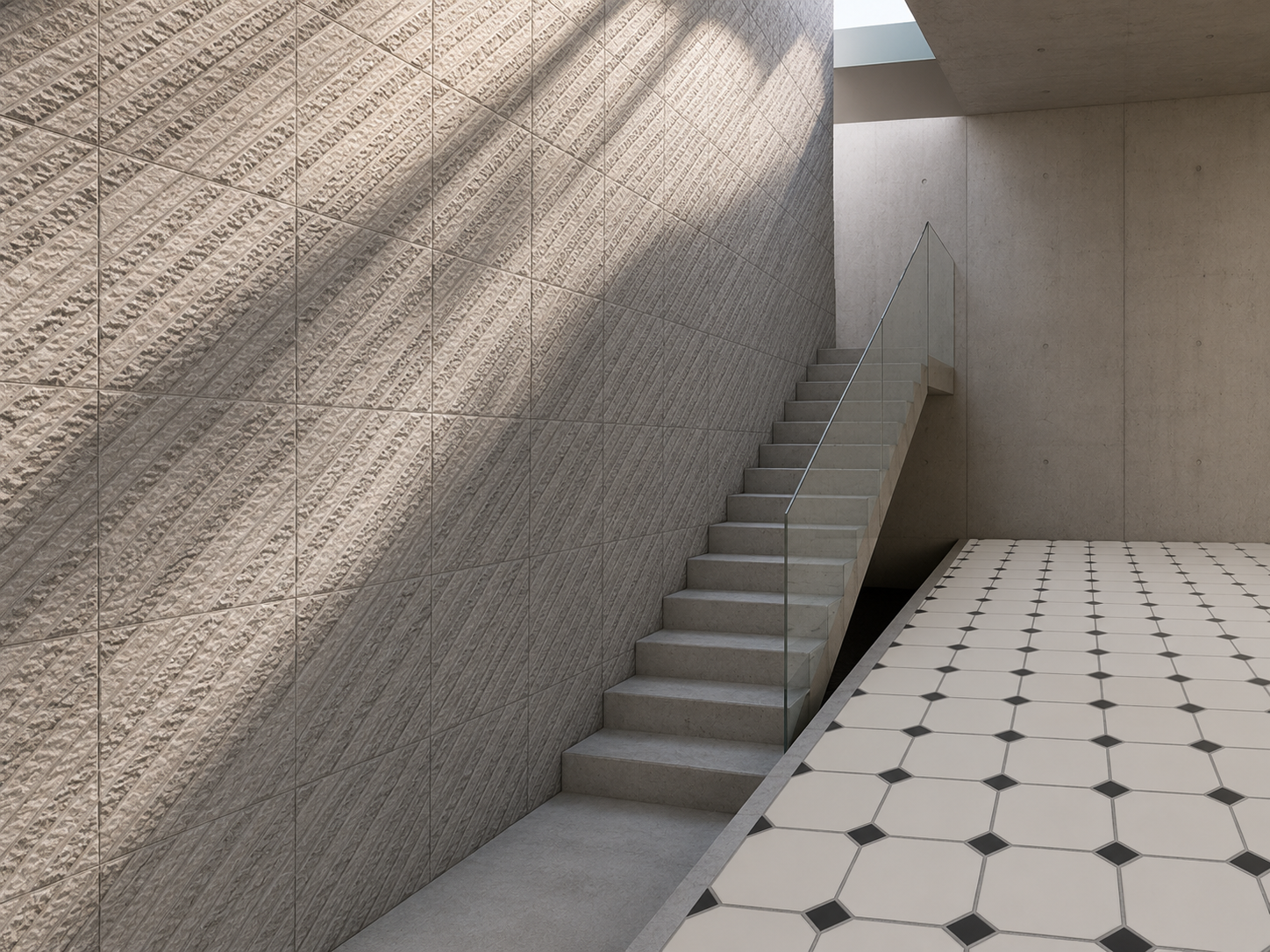
Tiles are often chosen through the eye first. A designer notices the color, surface, pattern, or scale and begins to imagine how it might shape a room. Yet the appearance of a tile tells only part of its story. Two tiles may look almost identical in a showroom while behaving differently after years of use.
This is where the comparison between vitrified and porcelain tiles becomes important.
Both materials are widely used in contemporary architecture. They appear in apartments, offices, hotels, retail spaces, public buildings, and exterior areas. Their visual range is one reason they are used so widely. A tile may carry the veining of marble, the grain of timber, the raw character of concrete, or the speckled appearance of terrazzo. The choice of scale is equally broad, from smaller tiles suited to detailed layouts to large slabs used for quieter, more continuous surfaces.
This variety can make the difference between vitrified and porcelain tiles appear straightforward at first. Vitrified tiles are usually associated with strength and everyday practicality while porcelain tiles are often linked with a denser body and more controlled manufacturing.
In reality, the boundary is less clear. The terms may overlap depending on the market, manufacturing process, and technical standard being followed. For an architect, the better question is therefore not simply, “Is this vitrified or porcelain?” It is, “How was this tile made, how has it been tested, and will its performance suit the space?”
The Terminology Is More Complex Than It Appears
Porcelain and vitrified tiles both belong to the larger ceramic tile family. They are made from mineral-based raw materials that are shaped and fired at high temperatures. During firing, parts of the tile body fuse and become dense. The result? It becomes a compact body that absorbs far less water than standard ceramic.
The word “vitrified” describes this hardening and compaction of the tile body during firing. Across India and several other markets, it is the term commonly applied to dense, low-absorption tiles produced under high heat. Vitrified products may be sold as glazed vitrified tiles, polished vitrified tiles, double-charge tiles, soluble-salt tiles, or full-body tiles.
Porcelain, meanwhile, is more closely connected to a defined performance classification. International and industry standards generally identify porcelain as an impervious ceramic tile with water absorption of 0.5 percent or less.
This creates an important overlap. A porcelain tile is vitrified during manufacturing, and some products sold as vitrified tiles may also meet the technical requirements used to classify porcelain. The two names do not always describe entirely separate materials.
For this reason, architects should treat the label as a starting point rather than a complete specification.
Key Architectural Differences
Composition and Manufacturing
The difference starts with the tile body.
Porcelain begins with a controlled blend of refined clays and minerals, typically kaolin, silica, and feldspar, though the exact proportions vary by manufacturers. The ingredients are ground into fine particles, pressed into shape, and then fired until they form a compact tile body.
Vitrified tiles follow a related process, but the term covers a wider group of products. Their bodies are also made from clay combined with minerals such as silica and feldspar. What changes from one product to another is the proportion of these materials, the way they are pressed, and the firing conditions used. Together, these decisions influence the density, absorption, strength, and final character of the tile.
Water Absorption and Exposure to Moisture
Water absorption is one of the most meaningful points in tile specification.
A tile with lower absorption allows less water to enter its body. This may improve its suitability for damp interiors and certain exterior conditions. Porcelain tiles are classified by their very low water absorption, generally 0.5 percent or below when tested according to the relevant standard.
Many vitrified tiles also have low absorption levels. However, the exact figure should be confirmed for the individual product rather than assumed from the category name.
For an interior wall in a dry bedroom, a small difference in absorption may have little practical impact. The same difference becomes more important on a bathroom floor, balcony, entrance, facade, or other area exposed to moisture and temperature changes.
Low absorption does not mean that every tile can be used outdoors or in freezing weather. The manufacturer must confirm whether the product is suitable for that application. The substrate, waterproofing system, adhesive, grout, joints, and drainage remain equally important. A dense tile surface cannot correct a poorly designed construction layer beneath it.
Strength, Density, and Daily Use
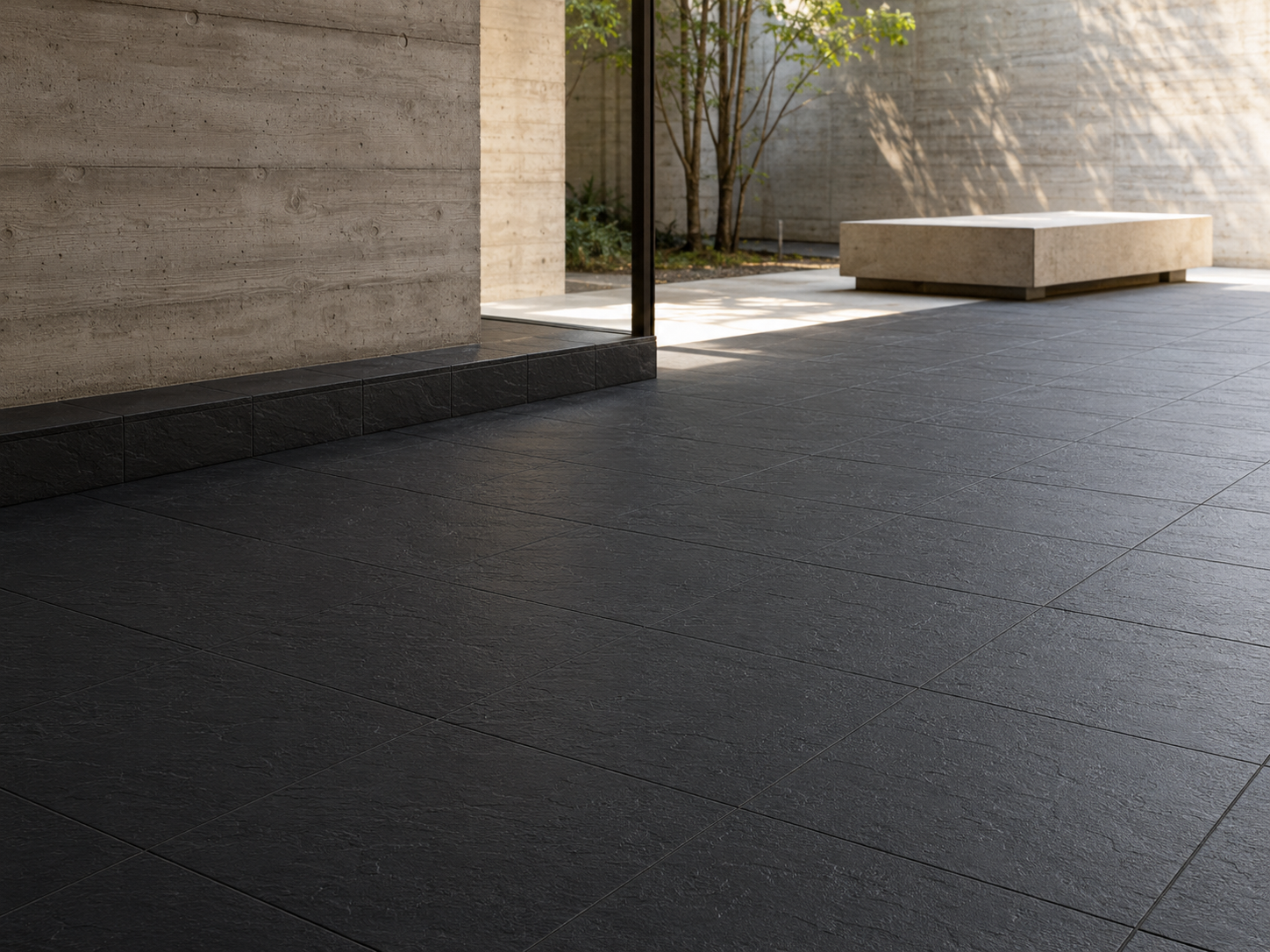
Both porcelain and vitrified tiles are chosen for spaces that require a firm, stable surface. Their dense bodies can support residential and commercial applications when the correct product is specified and installed properly.
Still, strength should not be reduced to a single word such as “durable.” Tile performance includes several different properties. Breaking strength describes how a tile responds to load. Abrasion resistance indicates how the surface may react to repeated foot traffic. Impact, scratching, staining, chemicals, and thermal movement introduce other concerns.
A hotel lobby and a private bedroom do not place the same demands on a floor. A retail entrance may receive grit from footwear throughout the day. A kitchen may face dropped utensils, grease, and frequent cleaning. A bathroom requires attention to water, grip, and drainage. The architectural choice should therefore begin with the conditions of use.
For busy public interiors, a through-body or full-body product may be considered because its color or composition continues deeper into the tile. Minor wear may appear less noticeable than it would on a surface where the decorative layer contrasts strongly with the body.
Glazed products offer a much wider visual range, but the performance of the glaze must suit the expected traffic. A decorative wall tile and a commercial floor tile may share a similar appearance while having very different surface ratings.
Surface Design and Material Expression
Porcelain has become closely associated with high-resolution surface printing and large-format design. It can reproduce marble veining, oxidized metal, limestone, timber, and concrete while maintaining a relatively thin architectural surface.
Vitrified tiles also offer a broad decorative range. Glazed vitrified products can carry digitally printed designs, while full-body and double-charge options create color and pattern through the body or upper material layers.
The visual difference between the two categories may therefore be difficult to identify without checking the product details. Architecturally, the more useful distinction lies in how the surface is constructed.
Is the pattern printed onto a glaze? Does it continue into the body? Is the finish polished, matt, textured, honed, or structured? Will the surface show reflections under strong daylight? Could the texture hold dirt in a busy commercial space? Does the printed variation repeat too frequently across a large floor?
These questions connect material selection to spatial experience. A highly polished surface can increase light reflection and make veining appear more pronounced. A matt finish may create a quieter reading of the same pattern. A textured tile can support grip but may require more careful cleaning. The material should be studied as part of the room, not as an isolated sample.
Tile Size and Architectural Scale
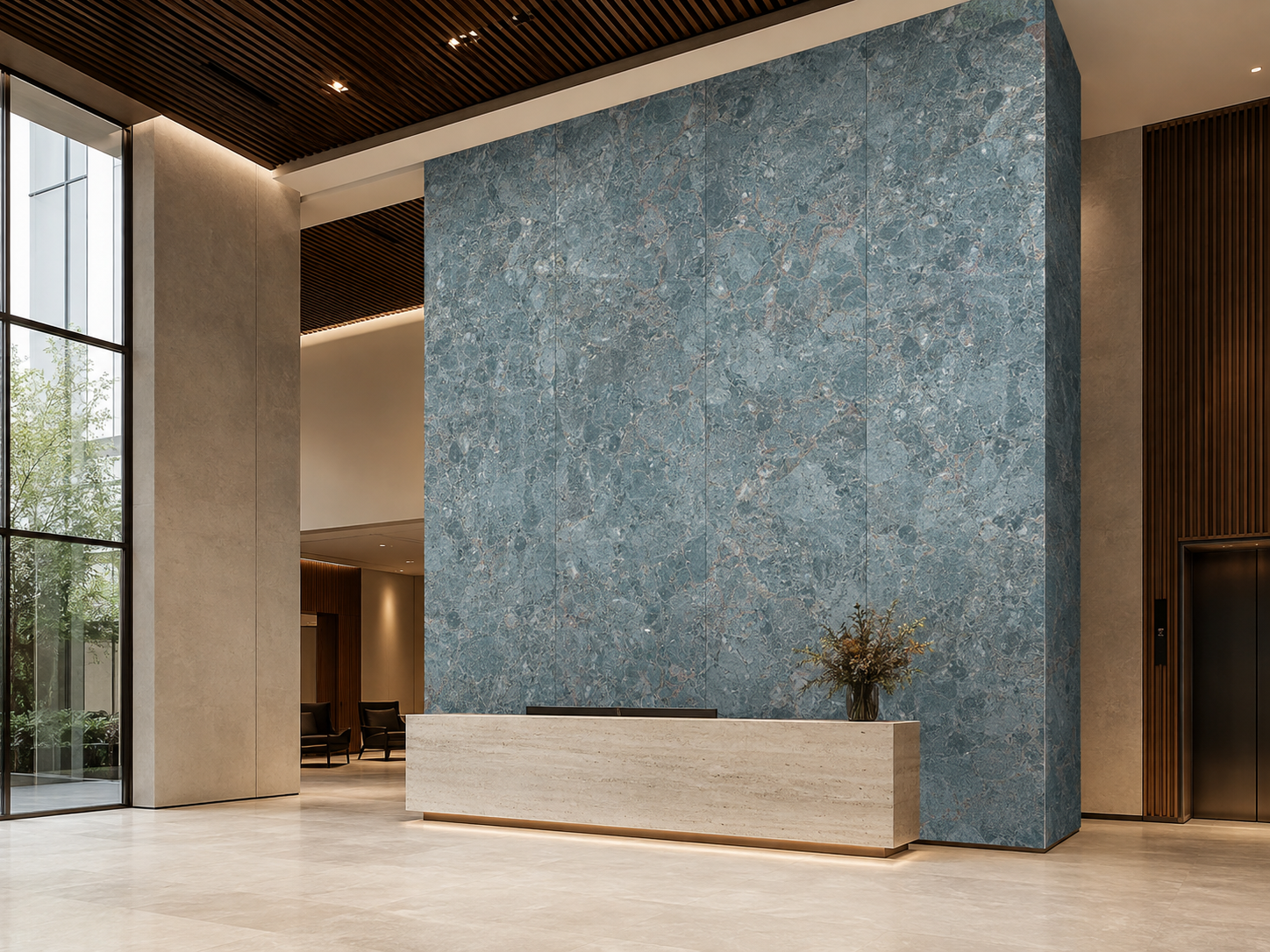
Both vitrified and porcelain products are available in large formats. Fewer joints can make floors and walls appear more continuous, which is useful in open living areas, hotel lobbies, commercial interiors, and minimal spaces.
Large tiles also change the installation process.
A large-format product requires a sufficiently flat substrate, suitable adhesive, proper handling, and good coverage behind the tile. Slight unevenness that might be manageable with a smaller tile can become more visible across a long edge. Poor alignment may lead to lippage, where one tile edge sits higher than the next.
Large porcelain slabs may also require specialist cutting and lifting equipment. Dense vitrified tiles can present similar handling challenges depending on their size and thickness.
This means format should never be selected through appearance alone. Access to the site, lift dimensions, doorway widths, cutting requirements, movement joints, installer experience, and replacement planning all influence whether a large tile is practical.
Cutting, Adhesion, and Installation
Dense tiles are generally harder to cut and may require appropriate blades and equipment. That same density affects how well the tile takes to an adhesive.
Traditional installation methods that depend heavily on the tile absorbing moisture may not suit dense porcelain or vitrified bodies. The right fixing system depends on the tile being used, the substrate beneath it, where it is going, and the format involved.
These decisions carry more weight in wet rooms, outdoor areas, heated floors, facades, and large-format work, where adhesive compatibility, coverage, joint width, curing time, and base preparation each play a role in how the finished surface holds up.
The back of the tile should also be checked. Dust or manufacturing residue can affect the bond if it is not dealt with according to the product and adhesive instructions.
In architectural practice, the tile and installation system should be specified together. Choosing the surface first and leaving the fixing method to the final stage can create avoidable problems on site.
Interior and Exterior Applications
Porcelain tiles are regularly specified for bathrooms, kitchens, commercial interiors, entrance areas, and certain outdoor surfaces. The physical properties of porcelain make it a reasonable choice for these settings, but the category name is not a specification in itself. The finish, surface rating, and tested performance still need to align with what the space actually demands.
Consider a polished porcelain tile as an example. Its reflective finish may look suitable across a living room or a dry hotel lobby. The same surface may be a poor choice near a shower or an entrance exposed to rain, especially when it does not offer the required level of grip.
Vitrified tiles are also used across a broad range of residential and commercial floors. Full-body products may be considered for spaces where repeated wear could gradually affect the surface. Since the color continues through more of the tile body, minor wear may be less noticeable. Glazed vitrified tiles offer greater freedom in pattern and color, making them useful where the visual design carries more importance.
In both categories, the correct application depends on more than density. Traffic, moisture, cleaning, exposure, surface texture, and installation conditions should all be reviewed before a final product is selected.
Final Verdict
Vitrified and porcelain tiles are often discussed as competitors, but the architectural reality is more nuanced. Their manufacturing methods and performance characteristics can overlap. A porcelain tile may be understood as a highly vitrified ceramic product that meets a defined absorption threshold, while the term vitrified covers several product types whose specifications can differ.
This does not make the distinction meaningless. It makes careful specification more important.
The surface visible at the end of a project is only the final layer of a larger system. Behind it sit the tile body, substrate, adhesive, joints, waterproofing, workmanship, and environmental conditions. When these elements are considered together, the choice becomes less about selecting the more impressive label and more about creating a surface that belongs to its architecture.