
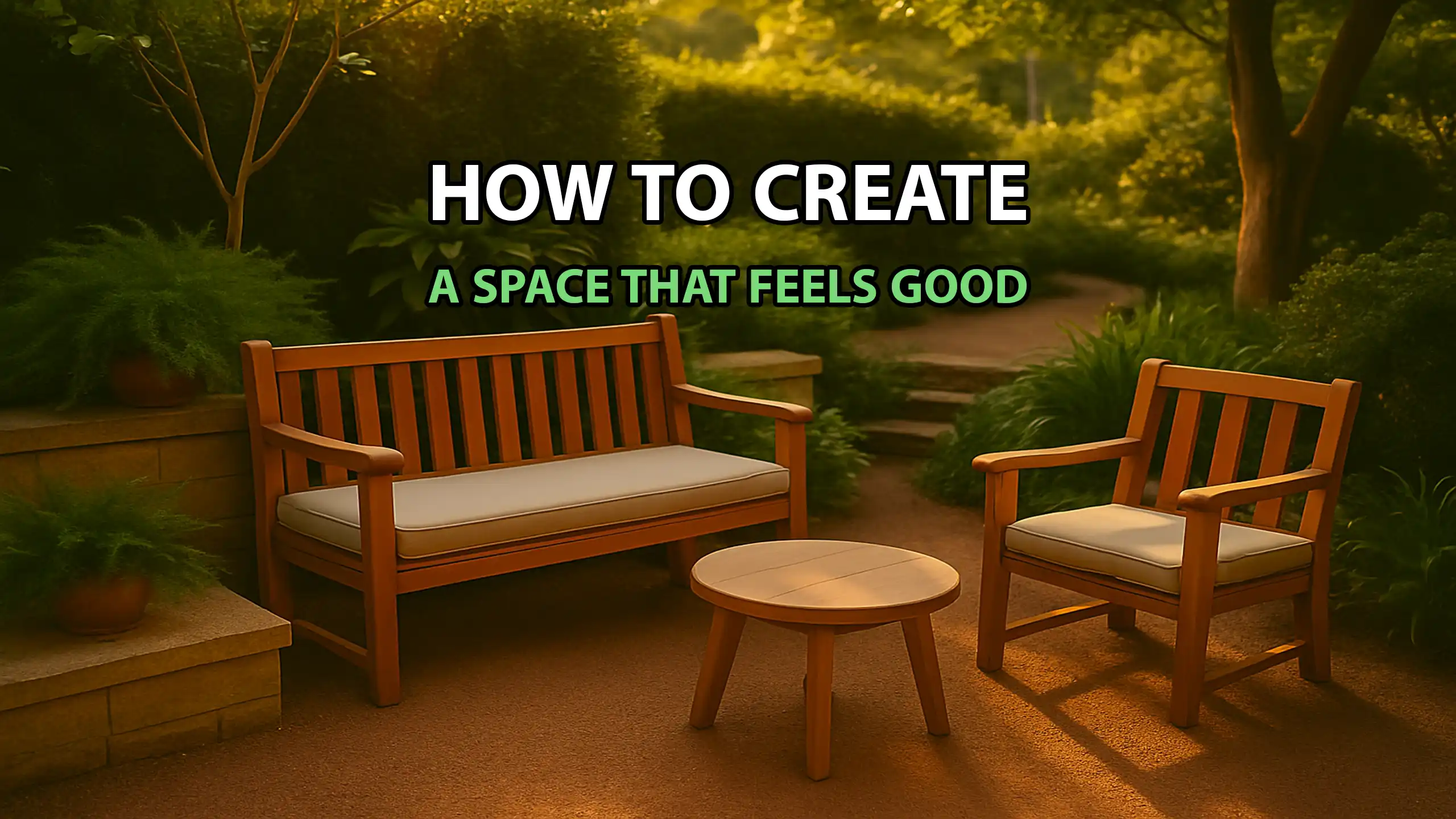
Some spaces feel good the moment we enter them. We slow down, breathe easier, and sense a quiet harmony without knowing why. Architecture often explains this with materials or form, but the truth is more human than technical.
This article looks at the small, subtle things that shape how we experience a place — light, texture, rhythm, and the way a space gently invites us in.
And if you’d like to see these ideas come to life, there’s a short video at the end. It’s a calm, visual extension of everything you’ll read here.
The Hidden Sensory Logic of Good Architecture
We’ve all had this experience: you walk into a room—someone’s home, a quiet café, a shaded courtyard—and before you even understand why, something inside you loosens. You breathe a little deeper. You stand a little lighter. You feel… good.
And then, of course, there are the opposite moments. Spaces that are beautiful, impressive, perfectly designed—yet strangely uncomfortable. Places that look right but feel wrong.
Most people assume the difference comes from style, furniture, or expensive materials. But there’s a more subtle layer at work. Good architecture isn’t just about shapes and aesthetics; at its heart, it’s a sensory experience. Our bodies read space long before our minds do.
This is where the quiet magic of architecture lives.

The Silent Conversation Between Body and Space
Walk into a space that truly works, and something begins to happen beneath your awareness. Your posture shifts. Your breath slows. Your attention becomes steadier.
This isn’t a coincidence—it’s design.
Humans are constantly “sensing” architecture through micro-perceptions:
- The way light moves across a floor
- How materials feel under your hand
- The acoustic softness or sharpness of a room
- Subtle changes in ceiling height
- The invitation of a corner, a ledge, or even a patch of sunlight
These cues shape whether a space feels welcoming, overwhelming, or indifferent. Long before we form an opinion, our nervous system has already decided.
Good architecture speaks directly to that system.
Why Some Spaces Feel Instantly Welcoming
We often think an invitation is about furniture or décor, but a welcoming space is more fundamental than that. It’s a space that tells you—without words—that you can relax.
It might be:
- Natural materials that feel alive
- Soft, indirect light that’s kind to the eyes
- Clear paths that require no mental effort
- A seat that doesn’t look staged
- A view that opens rather than confronting you
These elements create a gentle “yes” in the body. We trust the space. We settle into it.
Interestingly, the most welcoming environments are usually the least dramatic. They don’t shout for attention. They don’t try to impress. They simply make room for you to exist comfortably.
That is one of the strongest forms of design.
The Importance of Transitional Moments
Modern architecture often forgets something ancient cultures understood deeply: entry matters.
Historically, homes—from Roman atriums to Japanese genkan—offered a deliberate sequence before entering the main living area. This small choreography prepares the mind and body to shift states.
A good transition might include:
- A moment of dimmer light
- A slight narrowing of space
- A quiet pause before stepping into openness
- A soft sound change underfoot
These cues let the mind slow down, leave the outside world behind, and arrive fully inside. The space becomes more than a physical environment—it becomes an emotional threshold.
When architecture skips this step, we feel the difference instantly. We enter abruptly, without landing.
Where the Five Senses Become Architecture
The most overlooked truth in design is this:
We experience architecture with every sense, not just our eyes.
A space can feel good—or unsettling—based on sensations we rarely notice consciously:
- Sound: the rhythm of steps on wood or the hush of soft finishes
- Touch: the warmth of timber, the cool steadiness of stone
- Light: shadows that move gently, light that calms instead of blinds
- Smell: natural materials like cedar, plaster, rain on earth
- Taste (atmospheric): the “flavor” of air, temperature, humidity
When these elements harmonize, the result feels effortless. When they clash, even the most beautiful room feels wrong.
Architecture is always speaking; our senses are always listening.
Spaces That Let Us Be Ourselves
Perhaps the most powerful quality of a good space is its humility.
It doesn’t perform. It doesn’t demand.It doesn’t force an emotion or a reaction.
It simply holds us—quietly, respectfully.
Good architecture understands human proportions, human needs, and human psychology. It lets light fall where it feels natural. It pairs textures that comfort instead of overwhelm. It gives us corners to pause in, paths to follow, and air that feels like it belongs to us.
When a space feels good, it’s because it recognizes us.
Why This Matters for Everyday Life
We don’t need to live in masterpieces to feel the benefits of thoughtful design. Small changes—using natural materials, softening light, creating transitions, adding texture, welcoming scents—can transform the emotional quality of a place.
Whether you’re designing a home or simply rearranging a room, the question is the same:
How can this space be kinder to the senses?
Because when a space supports your senses, it supports your life.
Watch the Video
Below is the video version of this exploration, narrated and visualized to bring these ideas to life. If you’re interested in more reflections like this, feel free to subscribe—many more thoughtful, human-centered architecture topics are on the way.